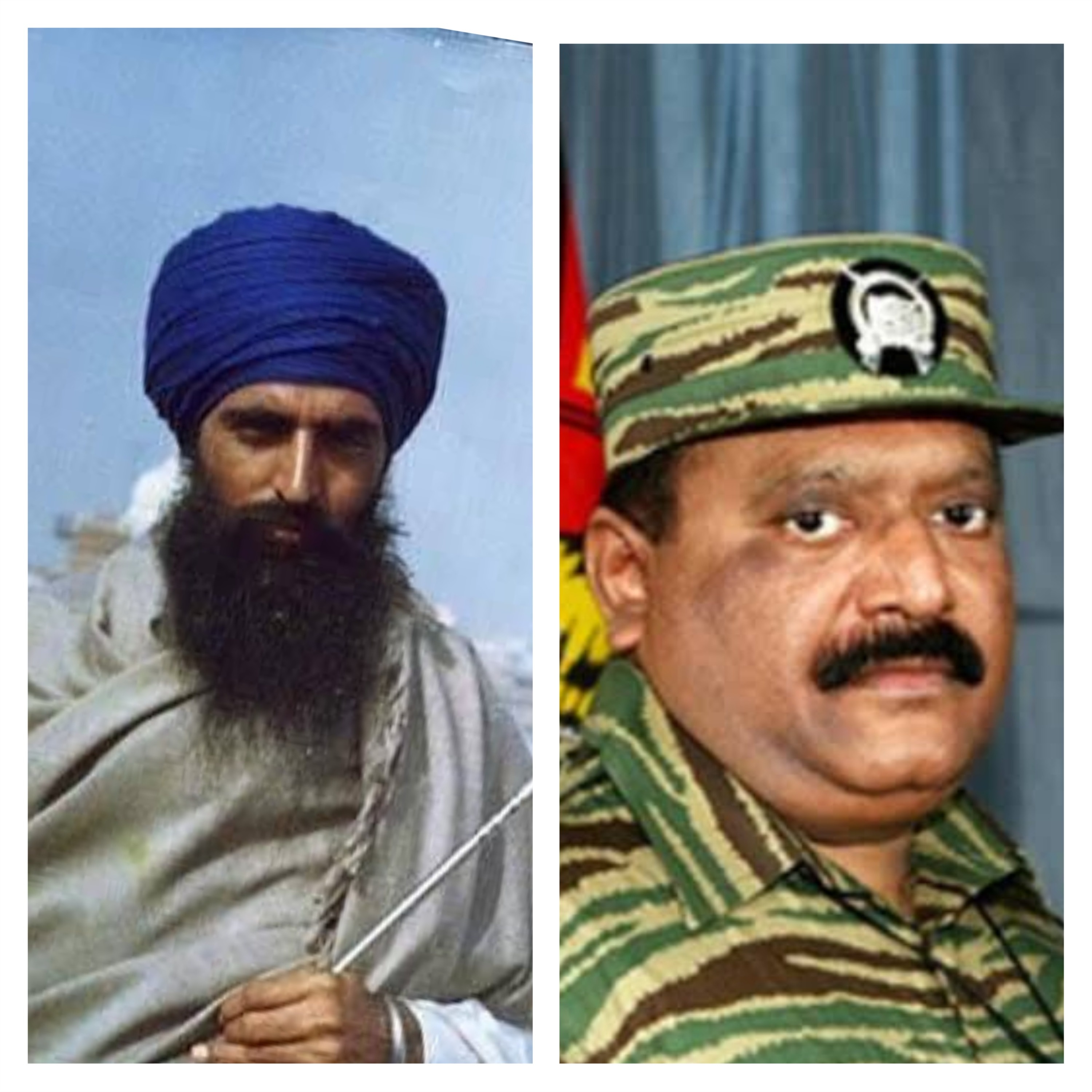
As November approaches, the appearance of flex banners and posters featuring late Liberation Tigers of Tamil Eelam (LTTE) chief Velupillai Prabhakaran across parts of Tamil Nadu often sparks public curiosity and debate. A similar phenomenon occurs in Punjab, where portraits of Jarnail Singh Bhindranwale—the late leader associated with the Khalistan movement—are frequently displayed at religious gatherings and public events. To many observers, the visibility of these figures raises a pressing question.
The answer lies in how Indian counter-terrorism and public order laws are structured. Under Indian jurisprudence, statutory bans target active organizations and living threats rather than deceased individuals.
The Unlawful Activities (Prevention) Act (UAPA)
The primary legislation governing banned entities in India is the Unlawful Activities (Prevention) Act (UAPA), 1967. Under Section 3 of the Act, the Central Government has the power to declare an association "unlawful" if it threatens the sovereignty and integrity of India. Furthermore, Section 35 allows the government to add organizations and living individuals to the First and Fourth Schedules of the Act as designated terrorists.
Under these provisions, the LTTE—founded by Prabhakaran—remains a proscribed terrorist organization in India, a ban that the Ministry of Home Affairs routinely extends every five years. Similarly, multiple Khalistani outfits linked to the separatist movement associated with Bhindranwale are outlawed under the UAPA. However, because Prabhakaran was killed in 2009 and Bhindranwale died in 1984, neither is listed as a banned individual, as the law does not posthumously designate deceased persons as active security threats.
Free Speech vs. Public Order
Displaying a portrait of a deceased historical or political figure is not inherently a crime under Indian law, largely due to the fundamental right to freedom of speech and expression guaranteed under Article 19(1)(a) of the Constitution.
However, this right is subject to reasonable restrictions under Article 19(2) in the interest of national security and public order. Legal enforcement typically hinges on context. Under Section 10 and Section 13 of the UAPA—which penalize membership in or support for an unlawful association—police can take action if posters feature the official emblems of banned groups like the LTTE, or if they carry slogans advocating separatism. Additionally, authorities frequently invoke provisions of the Bharatiya Nyaya Sanhita (BNS), such as Section 196 (promoting enmity between different groups) or Section 353 (statements conducing to public mischief), when banners threaten communal harmony or peace.
Ultimately, local police exercise significant discretion. While peaceful cultural tributes or birthday commemorations are often tolerated to avoid sparking regional unrest, law enforcement steps in whenever displays cross the line into glorifying banned outfits or inciting violence.